
Handmade Cream for Face with Pure Natural Ingredients
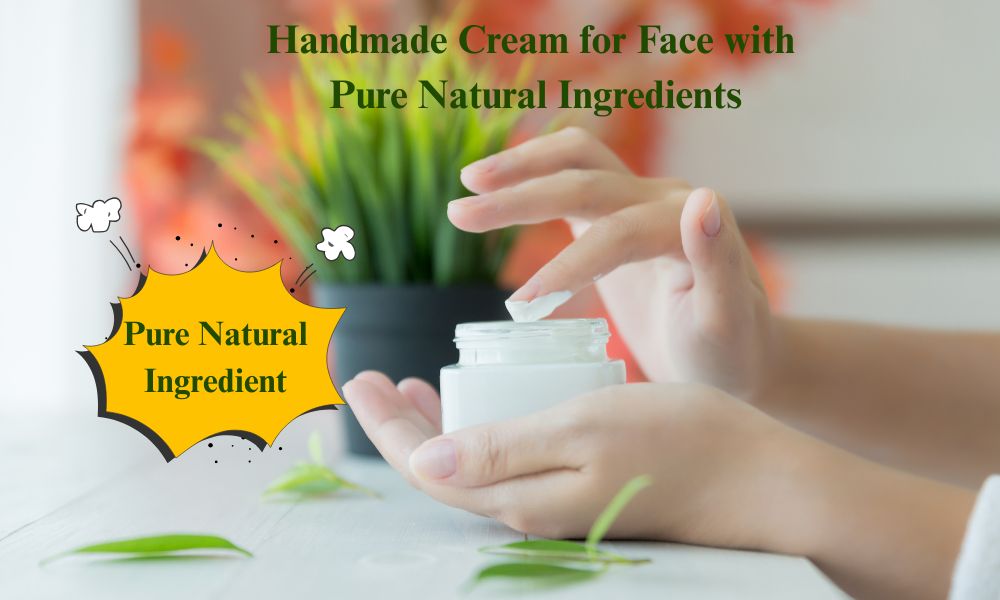
Handmade Cream for Face offers a natural way to care for your skin. Many people seek products free from harsh chemicals and artificial ingredients.
Handmade face creams are a rare find in a sea of commercial skincare products. They are commonly prepared with a few nourishing ingredients that keep the face moisturized and protected. Preparing your face cream can be a fun and rewarding process, and you can experiment with the scent and texture to choose what you want to apply.
In addition, manufacturers include moisturizing oils and botanicals that have numerous skin benefits. This blog will discuss the art of using Handmade Cream for Face and teach you how to formulate your unique creation. Enjoy high-quality skincare regularly, as unique as you are.
Embracing Natural Skincare
When choosing natural skincare, we opt for products that are both gentle on our skin and gentle on the environment. Many consumers prefer handmade items to commercial items made with synthetic materials. They can use products that they can identify and consume to help replenish their skin. Most of us have recently decided to discontinue using skincare products because of their extensive ingredient lists.
For those looking for a completely natural option, check out this helpful guide to natural face moisturisers and homemade recipes.
The Shift From Commercial Products
People are increasingly choosing to leave behind commercial skincare products, and this is no surprise. These products may also contain irritants, such as preservatives and artificial fragrances. You may have had breakouts or dryness after using them.
Using homemade face creams takes your power back by keeping skin from coming into contact with what you don’t know. Each equally tiny jar is typically packed with natural ingredients such as shea butter, essential oils, and plant extracts. These ingredients not only nourish your skin but also reduce your exposure to harmful chemicals.
Benefits Of Handmade Cream for Face
There are countless advantages of using handcrafted face creams. It is usually created based on an individual’s skin type and condition to give you a customized treatment. Have you ever had difficulty finding a product that suits your skin so well? Handmade options can solve that.
- Quality Ingredients: You can expect pure, natural ingredients without fillers.
- Eco-Friendly: Many artisans prioritize sustainable practices to reduce their environmental impact.
- Support Local Artisans: Choosing handmade often supports small businesses.
If you are specifically targeting glow, you may also like this step-by-step guide to a homemade moisturizer for glowing skin.
Key Benefits of Handmade Face Cream
I started using handmade face cream when my skin felt dull and tired. The first thing I noticed was how gentle it felt. Most handmade creams use simple oils and butters. My skin felt calm, not overloaded. In short, Handmade Cream for Face is gentle and skin-friendly.
Another thing I like is knowing what goes on my face. I can recognize the ingredients. That gives peace of mind. Still, results can be slow for some people. Natural care needs patience. So the main benefit is simple, gentle care with fewer surprises.
Ever stop to think about how the skincare you use affects not only your skin but also the planet? Embracing natural skincare is yet another way to live healthier. You can make smart choices that are good for you and good for the planet.
The Magic Of Handmade
There’s something about Handmade Cream for Face that has a certain charm. Each jar tells a story. It links you to nature and creativity. Last but not least, this unique mix does more than just care for the skin. It provides a personal touch.
Artisanal Touch In Skincare
Hand-crafted products shine in a crowded category. Each batch is made by skilled, careful hands. This attention to detail matters. You can feel the good love in every application.
Handmade creams are all about the natural. No harsh chemicals or fillers. Nothing but the purest good for your skin. This mild application is suitable for all skin types. It nourishes and hydrates effectively.
Customization And Personalization
With homemade face creams, you also have unique choices. You can pick scents, textures, and benefits. That’s what makes your skincare routine personal. Each jar is customized for you.
Personalized skincare addresses your specific needs. Dry skin? Oily complexion? There is a blend to fit everyone. This level of customizability truly elevates the experience.
Selecting The Right Ingredients
Walking you through choosing the right ingredients for your handmade face cream is essential. The correct mix can plump and protect your skin. It helps to know what each ingredient does. That way, you can make a cream that serves all your needs.
Natural Oils And Butters
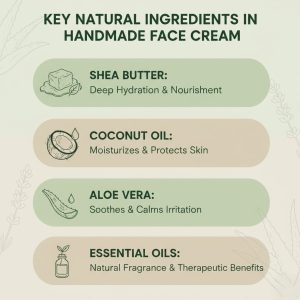
The base of any good face cream should be natural oils and butters. They provide moisture and nourishment. Seek out oils such as coconut, jojoba, and almond. Each oil has unique benefits. “Coconut oil, for example, is moisturizing; jojoba oil mirrors the skin’s own natural oils.
Coconut oil is deeply moisturizing, while jojoba oil closely mimics your skin’s natural sebum. You can learn more about the benefits of jojoba oil for the face and how it supports balanced hydration.
Butters, like shea and cocoa, are equally crucial to the mix. They are rich and creamy. They’re great for retaining moisture. Opt for organic, high-quality choices for the best results.
Herbs And Essential Oils
Make your cream even gentler on your skin with herbs and essential oils. They can calm and treat your skin or act as a pick-me-up. Lavender and chamomile are soothing choices. They help with redness and irritation.
Antibacterial properties here come from essential oils such as tea tree and eucalyptus. They can be beneficial for treating acne and breakouts. Essential oils should always be used in dilution. A little goes a long way.
For targeted treatment of pigmentation, you can also read about Ponds cream for dark spots and see how it compares with natural blends.
Understanding Skin Types And Needs
Know your skin type before you select ingredients. Oily skin needs light oils. If you struggle with excess shine, you may also explore the best options for Ponds moisturizer for oily skin to compare textures and ingredients.
For dry skin, opt for heavier butters. Combination skin requires a balance of both.
Pay attention to your skin’s needs. Is it sensitive or breakout-prone? Consider what ingredients address those needs. This ensures your handmade face cream works effectively.
Who Should Use Handmade Cream for Face (Suitable Skin Types)
I find handmade face cream to be the best for people who prefer simple, natural care. It feels gentle and honest on the skin. In short, Handmade Cream for Face suits people who want mild and minimal skincare.
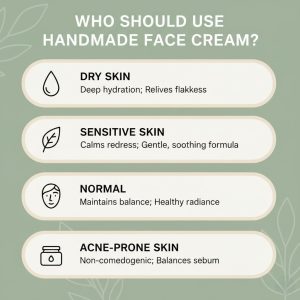
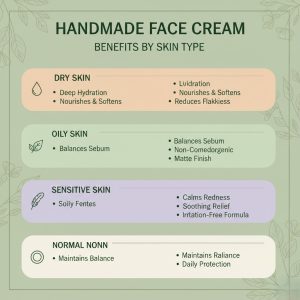
Skin Type | How It Usually Feels |
Dry Skin | Very nourishing and comforting |
Normal Skin | Keeps skin soft and balanced |
Sensitive Skin | Good if ingredients are mild |
Oily Skin | Can feel heavy if the formula is rich |
Acne-Prone Skin | Works only with light oils |
Quick take: Handmade Cream for Face works best when the blend matches your skin type.
Diving Into The Diy Experience
Diving into the DIY experience of making your own face cream can be both fulfilling and fun. Crafting your skincare products lets you tailor ingredients to your unique skin needs. The process is not just about saving money; it’s about creating something special just for you.
Getting Started With Diy Face Cream
Gathering your materials is the first step. You won’t need anything fancy, just a few essentials:
- Carrier oils such as coconut or almond oil
- Butters like shea or cocoa butter
- Essential oils for fragrance and benefits
- Beeswax or emulsifying wax
Start with a simple recipe. A basic formula includes:
- 2 tablespoons of carrier oil
- 1 tablespoon of butter
- 1 teaspoon of wax
- 5-10 drops of essential oil
Combine the oils and wax in a double boiler and heat over low heat until melted. Give it a good stir to combine everything. Once cooled, pour the mixture into a clean jar and let it set.
The Craft Of Cream Creation
Making homemade face cream is an art. It combines science and creativity. You can make a custom-made product for your skin. This is really easy and fun. Let’s discuss the tools, methods, and processes to do it.
Tools And Techniques
Having the right tools is key. You’ll also need a mixing bowl, a whisk, and measuring spoons. A double boiler helps melt ingredients evenly.
A digital scale is best for measuring precisely. You will also need a spatula to scrape the sides of the bowl. An airtight container is necessary for storage.
Techniques vary. Emulsifying is essential for mixing oil with water. Heat your oils, then add your water phase. Mix gently until completely smooth.
Sanitation And Safety
Sanitation is very important in making cream. Begin by washing your hands well. Wash all tools in hot, soapy water.
Use alcohol wipes on surfaces. This prevents contamination. To protect your skin and the cream, wear gloves.
Store ingredients properly. Check expiration dates. Don’t include any spoiled products in your cream.
Step-by-step Process
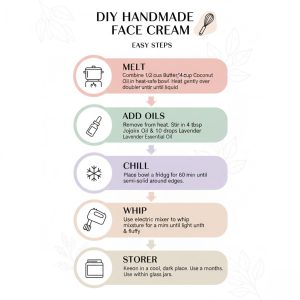
Begin by measuring your oils. Combine the two in the double boiler. Heat gently until they melt.
Measure your water phase in a different container. This may be distilled water or herbal infusions.
Sprinkle in the water once the oils are melted. Stir continuously to blend them. Continue stirring until the mix has thickened.
Add your essential oils and preservatives next. Mix well to ensure even distribution. Finally, pour the cream into your container.
Cool completely before sealing. Your Handmade Cream for Face is ready to go.
How to Use Handmade Face Cream
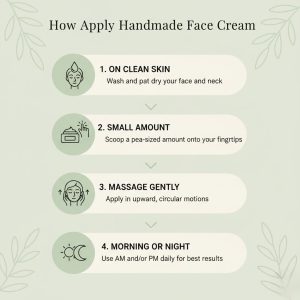
I use handmade face cream on clean, slightly damp skin. A pea-sized amount is often enough. I warm it between my fingers first. Then I press it into my skin. The key point is to use a small amount on clean skin.
If you want a detailed routine guide, here’s a helpful article on how to use face cream properly for maximum results.
Morning and night both can work. If your skin is oily, using it at night may be more effective. If your skin is dry, twice a day helps. Listen to your skin. It tells you a lot. So the best method is gentle, small, and consistent use.
Possible Side Effects or Patch Testing
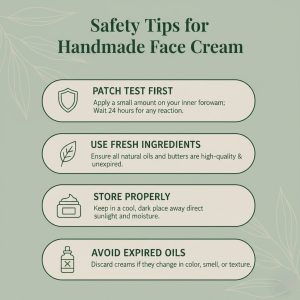
Even gentle products can cause reactions. I always patch test first now. I put a tiny bit on my wrist. Then I wait 24 hours. Patch testing helps you stay safe.
Some people may see redness or bumps. That can happen with new oils or scents. If that happens, stop using it. Your skin comes first. So a quick test can prevent bigger problems.
Efficacy And Preservation
Handmade face cream offers effective nourishment for your skin. It uses natural ingredients to enhance hydration and promote a healthy glow. Preserving its quality requires proper storage away from heat and light to ensure lasting benefits for your skin. Enjoy the gentle care it provides daily.
Making your own natural face cream can be a beautiful thing, but ensuring it’s both effective and properly preserved is equally important. You want the cream to not only work as quickly as possible, but also be safe and effective for the longest duration. Read on to find out how natural preservatives can take your recipe to the next level, and the proper storage techniques you’ll need.
Selecting The Right Ingredients
Natural preservatives are always a must-have to uphold the integrity of your homemade face cream. They guard against bacteria, mold, and other potentially harmful microorganisms. Some popular natural preservatives include:
- Vitamin E An antioxidant that helps prevent oils from spoiling.
- Rosemary Extract: Renowned for being antimicrobial.
- Grapefruit seed extract: A strong natural preservative that fights bacteria and fungi.
Adding these ingredients not only extends your cream’s shelf life but also enhances its skin value. Have you thought about how to implement these natural choices into your skincare routine?
Shelf Life And Storage
The shelf life of your handmade face cream largely depends on its ingredients and how you store it. Typically, when made with natural preservatives, a cream can last 3 to 6 months. To maximize freshness:
- Keep your cream in a cool, dark place.
- Make sure that the containers are clean to avoid contamination.
- Store in a tightly sealed container when not in use.
I label my cream with a date, and you may be inclined to do the same. That way, you can easily keep track of how old it is and how effective. Taking these steps not only preserves the cream but also ensures you get the most from its benefits. Is your skin ready to be treated the way it should?
Skin Benefits
A handmade face cream is packed with so many skin benefits that will elevate your skincare regimen. These creams can be customized to your particular skin requirements, from hydration to protection. But we’re going to delve a little deeper into the unique benefits of handmade face cream and show you how it can take your skin to the next level.
Nourishing Properties
Handmade face creams often contain natural ingredients that provide essential nutrients to your skin. Ingredients like shea butter, coconut oil, and essential oils deliver moisture and nourishment, promoting a healthy glow.
Ever feel the difference of using something more natural on your skin? It is often softer, more radiant. This is because homemade creams are rich in vitamins and antioxidants your skin needs for rejuvenation and repair.
- Vitamins: Ingredients such as vitamin E and C are used to defend against environmental damage.
- Fatty Acids: These help maintain your skin’s barrier and retain moisture.
- Antioxidants: They fight free radicals, reducing signs of aging.
Ingredients to Avoid in Handmade Face Creams
Some ingredients in handmade face cream can still irritate the skin, so knowing what to avoid helps keep it safe.
Ingredient to Avoid | Why It Can Be a Problem | Simple Tip |
Artificial Fragrance | Can cause itching and redness, especially on sensitive skin | Choose fragrance-free blends |
High Alcohol (Alcohol Denat., Ethanol) | Dry skin weakens the barrier | Pick alcohol-free creams |
Too Many Essential Oils | May irritate or burn skin if too strong | Use only 1–2 drops diluted |
Old or Rancid Oils | Can clog pores and irritate skin | Use only 1–2 drops diluted |
No Preservative in Water-Based Creams | Can grow bacteria and mold | Always use fresh oils |
Sustainability In Skincare
Handmade face cream is more than just a beauty product. It’s part of a movement towards sustainability in skincare. Many brands are embracing eco-friendly trends today. This shift is good for the planet, and it helps local communities. Choosing sustainable products is a small step with a big impact.
Eco-friendly Packaging
Sustainability in Skincare: The Role of Packaging. The homemade face creams often use recyclable materials. Popular options include glass jars and biodegradable containers. They help minimize plastic waste in our world. They are safer for the planet and for our skin.
Some brands offer refill options. Which is to say: You can reuse your container. It reduces waste and saves money. Eco-friendly packaging demonstrates a brand’s responsibility to the environment.
Supporting Small Businesses
Purchasing homemade face cream usually means supporting small businesses. Quality over quantity is what matters for these brands. They make products with care and pride. They tend to rely on local ingredients. This helps reduce transportation emissions.
When you purchase handmade items, you support artisans. You promote fair trade practices. This improves local economies and helps to build communities. When we support small businesses, we also support a healthier planet.
Troubleshooting Common Issues
Sometimes, stuff just doesn’t work out. For a less greasy face cream, reduce the oil. A bit of additional carrier oil can be added to help thin it out if it’s a little too thick.
Separation can occur if the mixture isn’t well blended. To fix this, warm it slightly and whisk it again.
Don’t forget about preservation. Add a natural preservative to help extend the shelf life if you are using water-based ingredients.
Have you ever had a DIY disaster? Tell us your stories about how you are managing, and pass along some advice. Remember, practice makes perfect.
Testimonials And Success Stories
When it comes to handmade face cream, people love to chronicle their experiences. Real stories show how this product has made a difference in their lives. These testimonials highlight transformations and the sense of community among users.
Real-life Transformations
Many users report softer, smoother skin after using handmade face cream. Jane, a 32-year-old teacher, noticed a big change. Her dry skin became hydrated in just a week. She felt confident and happy with her new glow.
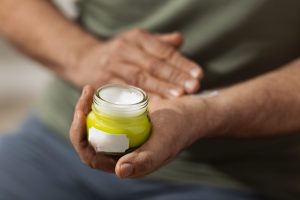
Mark, a 45-year-old father, struggled with skin irritation. After trying the handmade cream, he experienced relief. His skin felt calm and less red. He shared his success with friends, encouraging them to try it too.
Community And Sharing
The world of handmade face cream is kind. Tips and tricks for how to do it are shared all over online. They trade notes on various ingredients and techniques. This sharing creates a bond between users.
Many join social media groups to discuss their journeys. They celebrate each other’s successes. These connections make using handmade face cream a shared experience.
FAQ’s about Handmade Cream for Face
What Is The Best And Easiest Homemade Face Cream?
The best homemade face cream with all-natural ingredients is easy to make and enjoy. Warm equal parts coconut oil and shea butter until melted, then add a few drops of your favorite essential oil. This cream provides your skin with moisture, nourishment, and a calming effect.
What Is A 3 Ingredient Diy Moisturizer?
List of 3 ingredients DIY moisturizer. These are the most commonly used natural oils, butters, and essential oils. Combine these ingredients to create a nourishing, moisturizing cream.
What Is The Best Natural Thing To Moisturize Your Face?
Coconut oil is the best natural facial moisturizer. It hydrates well, and it works for most skin types. It is also good to apply Aloe vera gel, which has hydrating and soothing effects. Jojoba oil is best for y moisturizing because it mimics the skin’s natural oils and does not clog pores.
How Can I Make My Own Face Products?
To make your own face products, choose natural ingredients like oils, butters, and essential oils. Mix them in clean containers. For moisturizers, blend shea butter with coconut oil. Create scrubs using sugar and olive oil. Always patch-test new products to ensure skin safety.
Conclusion
Handmade face cream offers natural care for your skin. is made with simple, honest ingredients. It can also improve your skin’s health when used every day. Say goodbye to harsh chemicals. Delight in Softness and Beauty. Feel the softness and see the glow of your skin. Creating your own cream is simple and fun.
You decide what goes in it. Experiment with different recipes to find your own favorite. Adopt the goodness of handmade. Your skin deserves only the best, and it’s never too late to begin.


