
Can Dry Skin Cause Spots? Expert Tips to Protect Skin
While dry, flaky skin can be irritating and uncomfortable, did you know it might also produce spots? Whether your skin is dry or you wish to find out how dehydration affects it, the relationship between dry skin and acne-like patches is a crucial topic to look at.
Can dry skin cause spots? Find out how dryness leads to irritation, buildup, and clogged pores, and get tips to prevent spots and maintain healthy skin.
We will cover everything from knowing the reasons for dryness to practical preventative ideas.
Describes dry skin.
Dry skin, also called xerosis, is skin that isn’t soft, smooth, or flexible when it loses water. It may feel tight, gritty, or flaky, and the texture may be dull or bumpy.
Reasons for dry skin:
1. Climate and surroundings
Extreme wind or cold, dry environments can rob your skin of its inherent hydration. Winter indoor heating can also aggravate dryness, increasing your skin’s sensitivity to irritability and spot development.
2. Strong Cosmetic Products
Products including alcohol, sulphates, or strong perfumes will dry out your skin. Strong cleansers that remove natural oils often leave your skin open to spot development.
3. Over-exfoliation
Although keeping a good complexion depends on exfoliating, overdoing it can compromise your skin barrier and cause dryness and irritation, which would produce spots.
4. Lack of Water
Lack of water can significantly aggravate dry skin. Your skin suffers to keep equilibrium when it lacks water and necessary hydration, which causes problems, including spots.
5. Medical Illnesses
Some skin conditions, like psoriasis or eczema, can make the skin dry and more likely to get irritated or break.
Dry skin’s indicators and symptoms include:
- Rough texture or flakes
- Itchiness or irritation
- Redness or mild swelling
- Cracking or peeling
- A feeling of tightness, especially after cleansing
Who Is Most at Risk?
Though everyone can have dry skin, it’s more common among:
- People living in low-humidity or cold climates
- People who frequently use hot water or harsh soaps
- Those with sensitive or ageing skin
Although at first dry skin seems benign, its effects go beyond mere irritation. Treating and avoiding dryness will help to prevent additional skin problems, including spots.
Can Dry Skin Cause Spots?
If you have dry skin and have seen spots developing alongside it, the two can be related. Although most people link acne with oily skin, dryness can also produce conditions that cause spots and blocked pores. This is the process:
The Relationship Between Dry Skin and Spots:
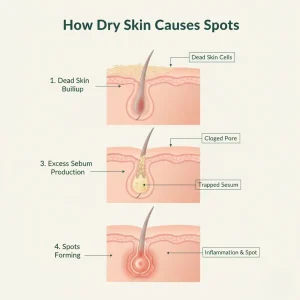
1. Sensitivity and irritation
Dehydrated skin becomes more sensitive to outside irritants, including dirt or bacteria. Redness, itching, and finally, spots could all follow from this sensitivity.
2. Dead Skin Buildup:
Sometimes, dry skin flakes cover the surface and block pores. Blocked pores are the main reason for acne-like lesions.
3. Overproduction of Sebum:
Your body seeks to compensate for overly dry skin by producing more grease. When this combines with dead skin, acne can show up really quickly.
4. Broken Skin Barrier:
Should the moisture barrier of the skin be compromised, healing itself may prove more difficult, which may cause long-term irritation and spots.
How can one differentiate dry skin spots from other issues?
The typical appearance of dry skin spots is rough or flaky. Unlike acne, which results from too much oil, they could feel dry and itchy rather than oily or red.
Types of Spots Associated with Dry Skin
Dry skin can lead to various types of spots, including:
1. Dry Skin Pimples:
- Small and less inflamed compared to regular acne.
- Often rough or flaky to the touch.
2. Red Spots and Irritation:
- Caused by inflammation from dryness and sensitivity.
- Swelling or raw patches may accompany it.
3. Dark Spots or Hyperpigmentation:
- People who are more likely to get hyperpigmentation may get scars or changes in colour after being dry for a long time.
You can tell if your dry skin is giving you skin problems by learning about these types. If it is, you can change how you take care of your skin.
How to Keep Skin from Getting Spots
Good news: if you follow the proper steps, you can avoid getting spots from dry skin. Here are some things you can do to keep your face healthy and hydrated:
Hydrate Inside and Out
- Drink Water:
Drink 6–8 glasses of water every day to stay refreshed.
- Use a Humidifier:
Low humidity can be fixed by adding water to the air, especially in the winter.
Making a skincare routine for dry skin
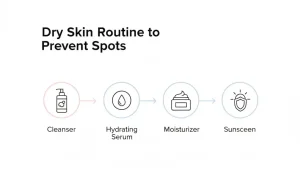
1. Pick a Gentle Cleanser:
You should use cleansers without sulphates that clean without breaking down your skin’s natural barrier against wetness.
2. Moisturize well:
Choose creams or lotions that are thick and moisturizing and have chemicals like hyaluronic acid, glycerin, or ceramides.
3. Use products that aren’t comedogenic.
Stay away from heavy products that could clog your pores.
5. Exfoliate Carefully
• Steer clear of scrubs since they might cause fragile, dry skin to rip.
• Use chemical exfoliants that gently exfoliate dead skin without aggravating sensitivity to lactic acid or polyhydroxy acids.
6. Apply Sun Protection
Sunburn raises your chance of spots and aggravates dryness. Daily, even in winter, apply a broad-spectrum sunscreen with SPF 30+.
These guidelines will help you to nourish your complexion and lower your risk of spots developing on dry skin.

Dealing with Dry Skin-induced Spots
If you’re already dealing with spots linked to dry skin, here are some actionable tips to treat them effectively:
Homeward Remedies
• Hydrating Masks: Select masks include natural ingredients like oatmeal, aloe vera, or honey to replenish hydration and ease inflammation.
• Natural Oils: For hydrating without clogging pores, oils including rosehip, argan, or jojoba work great.
Over-the-Counter Treatments
• Great hydration and restoration of your skin barrier come from ceramides and hyaluronic acid moisturizers.
• Target Treatments for Mild Cases: While salicylic acid or benzoyl peroxide might help remove spots, be cautious not to dry out your skin too much.
When should one see a dermatologist?
See a dermatologist if dryness and spots return despite your best efforts. Prescription-strength medications or a customized skincare routine may help you treat underlying issues.
FAQ
Can dry skin aggravate current acne?
Indeed, dry skin aggravates already present acne. Some people get acne when their skin is too dry because it makes them make more sebum than they need.
If you want to treat dry skin, should you stay away from certain foods?
Some foods, like those that are high in sugar, dairy, or processed fats, can make skin redness and dryness worse. Eat a lot of fruits, veggies, and omega-3 fatty acids to get better skin.
Can oily skin get dry and get spots?
Of course. Even people with oily skin can get dry skin from harsh makeup, changing weather, or too much exfoliation. When skin is both dry and oily at the same time, it may be more likely to get spots and plugged pores.
Conclusion
“Can dry skin cause spots?” the query begs—yes, it can. Dryness might not seem to be the leading cause of skin issues, irritation, dead skin accumulation, and blocked pores, but it creates the ideal storm for spot formation.
Still, you can maintain beautiful skin and minimize issues such as dryness and spots with a tailored skincare routine, proper water, and preventative practices.
Dry skin doesn’t define your complexion. A few tweaks to your technique will keep your skin bright, pleasant, and free of blebs. Invest in your skincare regimen and give the hydration of your skin priority if you’re ready to fight dryness and stop spots.


