
Moisturizer vs Lotion: Benefits Differences & How to Choose
Moisturizer vs Lotion: What’s the Difference for Your Skin?
What is a Moisturizer?
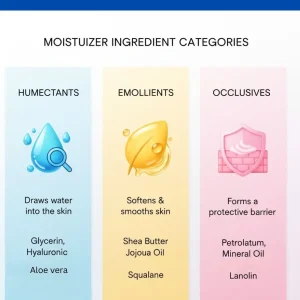
- Humectants: These are ingredients that attract water. They extract moisture from the deep layers of your skin and the air and bring it to the surface. Some typical humectants include glycerin, hyaluronic acid, and aloe vera.
- Emollients: These are what give moisturizers that nice, soft, smooth feel. They do this by lying between skin cells, smoothing the skin’s texture. Examples include shea butter, cocoa butter, and various oils such as jojoba and almond.
- Occlusives: These create a physical barrier on the skin to prevent moisture loss by evaporation. They tend to be heavier and are usually oil-based. Petrolatum (the primary component of Vaseline), lanolin, and mineral oil are potent occlusives.
What is a Lotion?
If you’re looking for body lotions, explore:
Moisturizer vs Lotion: The Key Differences
1. Water Content and Viscosity
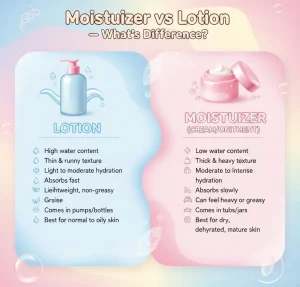
- Lotion: Has a very high water content, making it thin, runny, and low in viscosity. It spreads easily and absorbs: This type of base has a very high water content, which is why it is thin, runny, and low in viscosity. Orbs almost instantly.
- Moisturizer (Creams/Ointments): The term “moisturizer” is commonly used to describe creams and ointments. Creams are thicker, contain less water and more oil, and include other hydrating ingredients. It’s what makes them denser and so rich. Ointments have the highest oil content and are the thickest of the products.
2. Hydration Intensity
- Lotion: Provides a light and immediate burst of hydration. However, because of its high water content and lower oil concentration, the moisturizing effect may not last as long, especially for dehydrated skin.
- Moisturizer (Creams/Ointments): Provides deeper, longer-lasting moisture. The higher oil percentage provides a stronger layer on the skin and has been proven to reduce water loss over an extended period. That’s what makes them perfect for combating moderate to severe dryness.
3. Absorption and Feel
- Lotion: Absorbs quickly without leaving a heavy or greasy residue. It’s perfect for those who dislike the feeling of product sitting on their skin.
- Moisturizer (Creams/Ointments): Absorbs slowly and can create a protective film on the skin. Some may find it heavy or greasy, especially on the face or in hot weather, but this is what makes it work so well.
4. Packaging
- Lotion: Due to its thin consistency, it’s almost always packaged in a pump bottle or a squeeze tube.
- Moisturizer (Creams): Its thick texture means it’s typically found in jars or tubs, as it wouldn’t be easy to dispense from a pump.
Water Content | High | Low |
Texture/Viscosity | Thin, runny | Thick, heavy |
Hydration Level | Light to moderate | Moderate to intense |
Absorption Speed | Fast | Slow |
Feel on Skin | Lightweight, non-greasy | Heavier, sometimes greasy |
Packaging Type | Pumps or bottles | Tubs or jars |
Best For Skin Type | Normal to oily skin | Dry, dehydrated, mature skin |
The Benefits of Using a Moisturizer or Lotion
- Prevents Dryness: The most obvious benefit! Regular use helps keep skin well hydrated, preventing it from becoming dry, tight, and flaky.
- Maintains Skin Barrier: You have a lipid barrier on your skin, a natural protective shield against environmental aggressors such as pollution, bacteria, and allergens. Moisturising reinforces this barrier, helping keep it healthy and working correctly.
- Relieves Sensitive Skin: Dry skin is often sensitive and prone to irritation. The right moisturizer can also help soothe redness and inflammation in conditions such as eczema or rosacea.
- Helps Enhance Skin Tone and Texture: When skin is hydrated, it appears more radiant and smoother. So, adequate hydration can plump the skin, making fine lines and wrinkles less visible. It also contributes to a softer, more even texture.
- Helps Other Products Work Better: Applying moisturizer to damp skin can help seal in not just water but also any serums or treatments you’ve applied beforehand, making them more effective.
What Is a Facial Moisturizer?
If you’re curious about choosing the right face moisturizer, check out these guides:
Lotion vs Facial Moisturizer: Key Differences
Feature | Lotion | Facial Moisturizer |
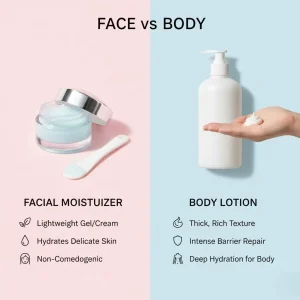
Texture | Thicker and heavier | Lighter and often non-greasy |
Water Content | High | Varies; often balanced with other ingredients |
Oil Content | Higher than facial moisturizers | Lower; often oil-free or non-comedogenic |
Best For | General body hydration (arms, legs, torso) | Delicate skin on the face and neck |
Absorption Speed | Slower to absorb | Absorbs quickly into the skin |
Suitable Skin Types | Normal to dry body skin | All facial skin types, including oily and sensitive |
When to Use Lotion
- After a shower or bath, apply lotion to damp skin to lock in moisture and keep your arms, legs, and torso hydrated throughout the day.
- For normal to dry body skin: lotions are suitable for everyday use to help prevent areas that aren’t overly sensitive from becoming dry and flaky.
- To treat rough spots: Use lotion to soften areas like elbows, knees, and heels that tend to get dry and rough.
- During dry seasons, applying consistently can help protect your skin from the harsh, moisture-depleting elements of colder months or drier climates.
When to Use Facial Moisturizer
- Twice daily: Apply after cleansing both morning and evening to rejuvenate with moisture and an intense protective barrier. A morning moisturizer is usually formulated with SPF, while a night cream may focus on repair.
- To help with dry, dehydrated skin: If your skin is tight, flaky, or dull, your moisturizer will hydrate it and make it feel better.
- For managing signs of ageing: Moisturizers with anti-ageing ingredients, such as retinol or peptides, can help reduce the appearance of fine lines and wrinkles by keeping skin plump and firm.
- To calm sensitive skin: Formulations that address sensitivity can also help reduce redness and irritation while fortifying your skin’s barrier.
- In different climates: Choose a lighter gel formula for a humid environment, and embrace a richer cream for cooler, drier conditions to protect your skin from environmental stress.
Can You Use Facial Moisturizer on Your Body?
- Great for small body areas: use it on more delicate areas like your neck, chest, and hands that could use a gentle, high-quality formula.
- Beneficial for sensitive skin: If you have areas of your body prone to breakouts or irritation, a facial moisturizer with a non-pore-clogging formula is a great choice.
- Provides lightweight hydration: Facial creams are not greasy and absorb instantly, but they may be too lightweight for extra-dry areas like your elbows or heels.
- Consider the higher cost: The biggest drawback is price. Facial moisturizers come in smaller sizes and cost more, making them an expensive option for all-over body use.
Can You Use Body Lotion on Your Face?
- Risk of Clogged Pores: Most body lotions contain thick, occlusive ingredients that can clog your face’s smaller pores, leading to blackheads to flare up.
- Greasy Sensation: The thick formulas intended to lock in moisture on the body can leave your face feeling greasy and heavy.
- Worsens Acne-Prone Skin: If your skin is already susceptible to acne, the ingredients in body lotion are highly likely to trigger or worsen blemishes.
- Potential for Fragrance Irritation: Many body lotions contain strong fragrances that can easily irritate the more sensitive skin on your face, causing redness or reactions.
Who Should Use Both Lotion and Facial Moisturizer?
- Combination Skin: Use a lightweight facial moisturizer to balance oily and dry areas on your face and a standard body lotion.
- Dry Body, Oily Face: This common issue requires a non-comedogenic, oil-free moisturizer for the face and a richer, more hydrating lotion for the arms and legs.
- Cold Weather Exposure: Harsh, dry air demands more from your skin, making a protective facial cream and a heavy-duty body lotion essential.
- Ageing Skin: Targeted facial moisturizers can address fine lines, while a nourishing body lotion helps maintain elasticity and softness elsewhere.
Skin Type / Condition | Face Needs | Body Needs |
Combination Skin | Lightweight facial moisturizer to balance oily + dry zones | Standard body lotion for overall hydration |
Dry Body, Oily Face | Oil-free, non-comedogenic facial moisturizer | Rich, deeply hydrating lotion for arms & legs |
Cold Weather Exposure | Protective, thicker facial cream to prevent dryness | Heavy-duty body lotion to fight harsh, dry air |
Aging Skin | Targeted facial moisturizer for fine lines & firmness | firmnessNourishing body lotion to maintain softness & elasticity |
How to Choose the Right Product for Your Skin Type
For Dry or Mature Skin
- Your Best Bet: A cream moisturizer.
- Why it works: Sufferers of dry, mature skin tend to produce less sebum, the natural oil, on the surface of our skin, which makes retaining moisture difficult. A cream’s heavy, oil-based formula is an excellent occlusive agent that seals moisture in for hours! It will help rejuvenate depleted lipids, leaving skin feeling soft and pliable.
- What to Look For: The most effective moisturizer for dry skin will include a combination of humectants, which draw moisture from the environment; emollients, which smooth the texture; and occlusives, which create a layer on the skin.
- Look for ingredients like:
- Hyaluronic acid
- Glycerin
- Ceramides (lipids that are crucial for barrier function)
- Shea butter
- Lanolin
- Petrolatum (for extremely dry or cracked skin)
For Oily or Acne-Prone Skin
- Your Best Bet: A lightweight lotion or an oil-free gel moisturizer.
- Why It Works: A lotion for oily skin provides necessary hydration without adding extra oil. Its high water content and light texture won’t feel heavy or clog pores. Gel moisturizers are often water-based and completely oil-free, making them another excellent choice.
- What to Look For: Use products labelled “non-comedogenic,” meaning they won’t clog pores.
- Key ingredients include:
- Hyaluronic acid (provides oil-free hydration)
- Glycerin
- Niacinamide (helps regulate oil production and reduce inflammation)
- Salicylic acid (if you are acne-prone)
For Combination Skin
- Your Best Bet: A lightweight lotion or a combination approach.
- Why It Works: A light lotion is often a balancing act, providing sufficient moisture to dry areas without suffocating oily areas. Or you can opt for two separate products: a lighter lotion down the center of your face and a richer cream on your cheeks.
- What to Look For: Seek out balanced formulas that hydrate without feeling greasy. Here, ingredients like
- hyaluronic acid and
- Glycerin is your best friend.
For Normal Skin
- Your Best Bet: A classic lotion.
- How it works: Lotion delivers the ideal amount of daily moisture to normal to dry skin with a lightweight feel. You could try a cream instead in winter or if you live in a dry climate, especially if your skin seems to need a little extra help.
- What to Look For: A balanced formula with humectants and emollients works best.
For Sensitive Skin
- Your Best Bet: A gentle, fragrance-free cream or lotion.
- Why it Works: The key is to avoid common irritants. The choice between lotion and cream depends on your level of dryness.
- What to Look For: Always choose products that are:
- Fragrance-free
- Hypoallergenic
- Free of alcohol and dyes
- It is rich in soothing ingredients such as ceramides, aloe vera, and niacinamide.


